
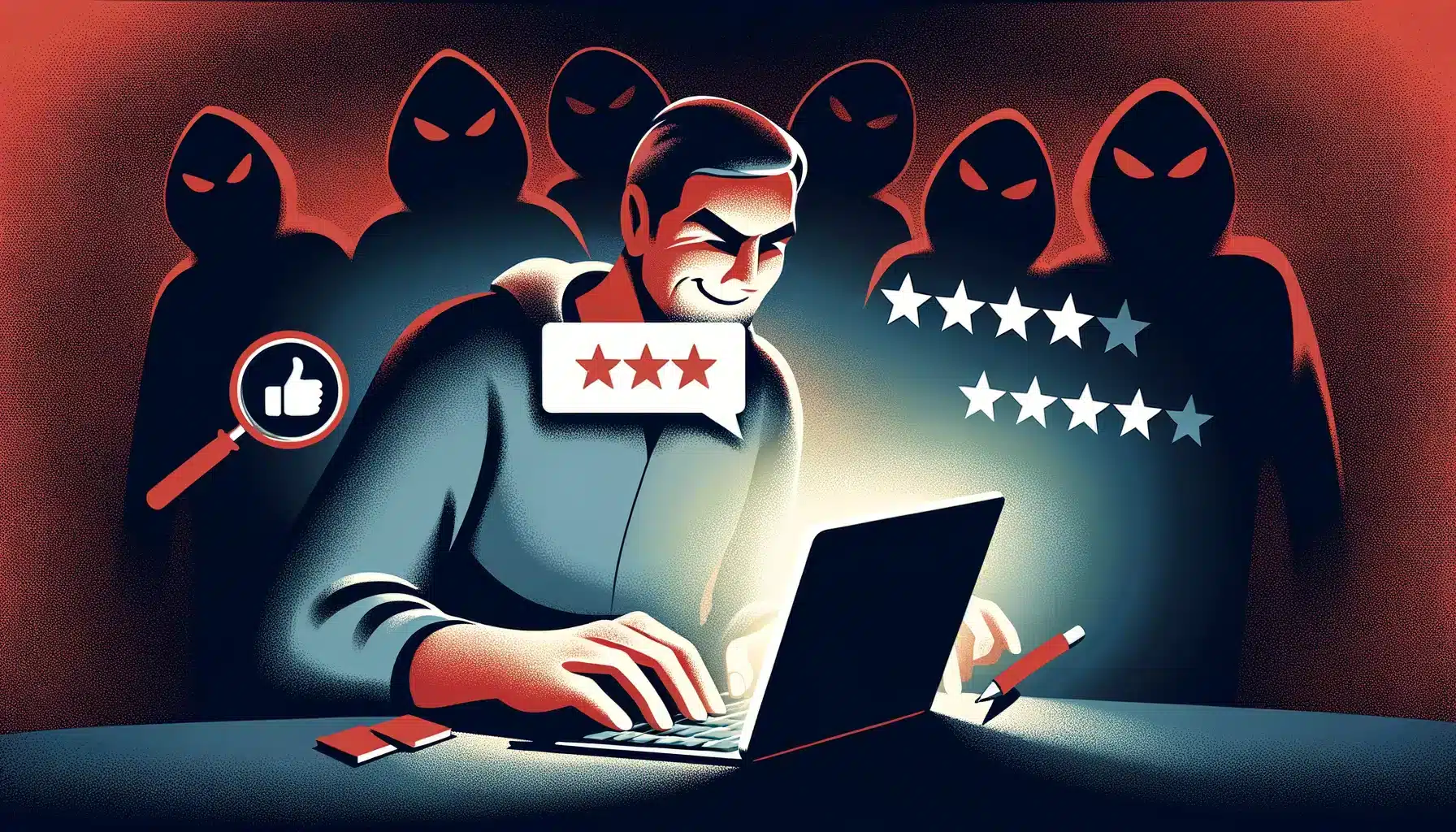
Have you ever thought about using fake reviews to pad your Google Business Profile or offset a bad review or two left for your business? Or, worse, leaving a bad review for a competitor? It’s not a good idea for many reasons.
Fake Reviews and MORE Fake Reviews
Fake reviews are everywhere, and, as early as 2013 New York, Attorney General Eric Schneiderman settled with 19 different SEO companies over a lawsuit brought against them by Yelp, a local search website that allows readers to leave reviews about the companies listed:
“NEW YORK — Attorney General Eric T. Schneiderman today announced that 19 companies had agreed to cease their practice of writing fake online reviews for businesses and to pay more than $350,000 in penalties. “Operation Clean Turf,” a year-long undercover investigation into the reputation management industry, the manipulation of consumer-review websites, and the practice of astroturfing, found that companies had flooded the Internet with fake consumer reviews on websites such as Yelp, Google Local, and CitySearch. In the course of the investigation, the Attorney General’s office found that many of these companies used techniques to hide their identities, such as creating fake online profiles on consumer review websites and paying freelance writers from as far away as the Philippines, Bangladesh and Eastern Europe for $1 to $10 per review. By producing fake reviews, these companies violated multiple state laws against false advertising and engaged in illegal and deceptive business practices.”
Phony Reviews and Astroturfing
Leaving fake reviews is an easily understood tactic. Astroturfing is the practice of masking sponsors of a message to give the appearance of it coming from a disinterested, grassroots participant. It’s easy to see why both are dangerous to consumers. No one cares about the opinion of a Bangladeshi person who’s never seen a Vitamix when deciding whether to purchase that Vitamix. You want to know what true consumers of the product think of that product. This is also of huge concern to sites like Yelp and Amazon who suffer loss of trust when black hat SEO companies piggyback on their websites, polluting their reviews for their own ends. Google also doesn’t like it much, and over the years they have only increased their demand for transparency, accountability, and good useful content.
Roots Marketing is committed to using white-hat, Google-compliant methods to get your website on the front page of Google and other search engines. We don’t take those kinds of risks because they don’t benefit you, your clients or us.
Contact Tom directly at tom@corporateconversions.com or 616-426-9303.